
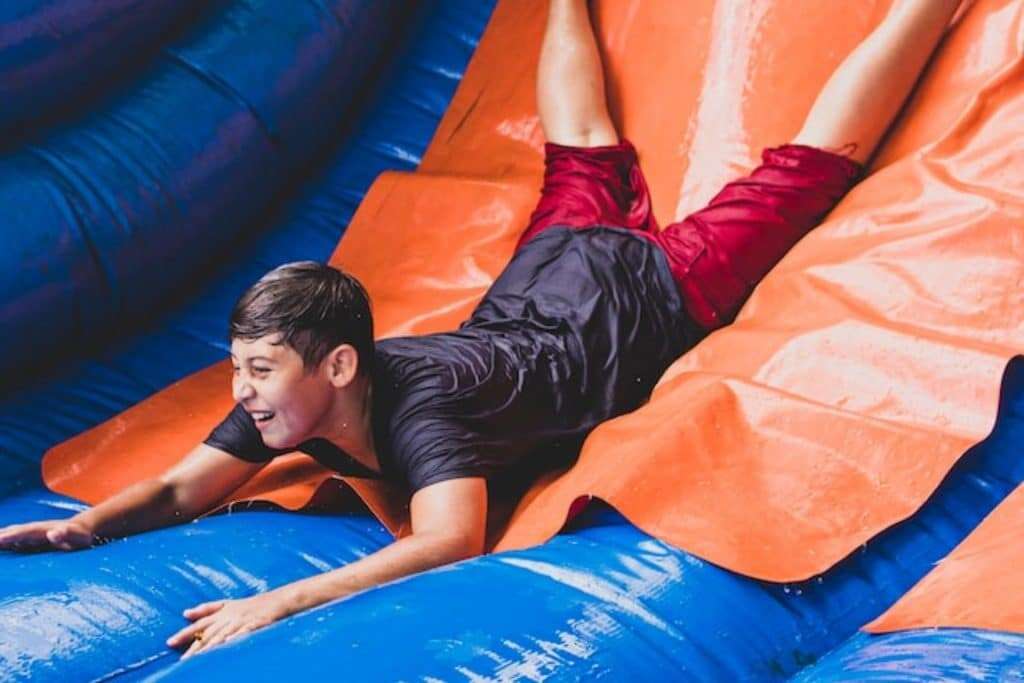
There’s a reason safety is the first thing that crosses your mind when you consider a water slide.
Not because you expect something to go wrong—but because you’ve seen the videos, heard the stories, and you just want to get it right.
If you’re planning a spring or early summer event in Asheville or Fletcher, here’s the truth:
A properly installed water slide is extremely safe.
The difference is who sets it up—and how.
This guide walks you through what actually matters, so you can book with confidence—not second-guessing.
How Professional Anchoring Works
This is the part most people never see—but it’s one of the most important.
A water slide should never just be “placed” in your yard. It’s anchored.
Stakes vs. Sandbags
Stakes (for grass setups): Heavy-duty stakes are driven deep into the ground to secure the inflatable at multiple anchor points.
Sandbags (for hard surfaces): Used when stakes can’t be driven—like driveways or compacted areas. These must meet strict weight requirements.
If a company is “choosing whichever is easier,” that’s a red flag.
Surface Types Matter
Grass, turf, gravel, and concrete—each surface requires a different setup approach.
A professional team adjusts:
- Anchor method
- Placement direction
- Slide orientation
That’s why it’s worth working with providers who specialize in properly installed water slide rentals for different yard types .
Wind Thresholds
This is where safety becomes non-negotiable.
Reputable companies follow strict wind guidelines:
- Monitoring forecasts before delivery
- Assessing conditions on-site
- Cancelling or rescheduling when necessary
It’s not inconvenient—it’s professionalism.
Why Slope & Drainage Matter
In Asheville and Fletcher, flat yards aren’t always the norm.
And with water slides, slope changes everything.
Mountain Terrain Considerations
A slight slope might not seem like a big deal—but it affects:
- Slide stability
- Water flow
- User landing safety
Proper setup ensures the slide is level and supported—even on uneven ground.
Pool Base Slides & Water Runoff
Water has to go somewhere.
Without proper drainage:
- You get pooling
- Slippery surfaces around the slide
- Mud buildup that turns into a mess
A professional setup accounts for:
- Water direction
- Safe runoff zones
- Yard protection
If you’re still deciding between options based on your yard, this helps clarify: How to choose between a bounce house and a water slide for spring events
Supervision & Age Guidelines
Even the safest setup still needs one thing:
Clear supervision.
Slide Height & Age Matching
Not every inflatable is designed for every age group.
- Younger kids → smaller slides, gentler slopes
- Older kids → taller, faster slides
Matching the right slide to your group reduces risk instantly.
Adult Monitoring (What Actually Works)
You don’t need to hover—but you do need structure.
Simple rules:
- One rider at a time (unless designed otherwise)
- No climbing up the slide
- Clear entry/exit flow
And one adult nearby who’s paying attention—not managing five other things.
What “Licensed & Insured” Actually Means
You’ll see this phrase everywhere.
But here’s what it should actually include:
Insurance Coverage
A legitimate company carries liability insurance that protects:
- Your property
- Your guests
- The equipment itself
Inspection & Cleaning Routines
Before any setup:
- Equipment is inspected
- Surfaces are cleaned and sanitized
- Blowers and connections are checked
This isn’t optional—it’s standard for professional operators.
If you want a deeper look: What to look for in a safe, clean inflatable rental company
Setup Procedures You Should Expect
A professional setup includes:
- Site inspection
- Proper anchoring
- Safety briefing (if needed)
- Clear usage guidelines
Not rushed. Not improvised.
Planning Beyond the Slide (What Smart Hosts Do)
Safety doesn’t stop at the inflatable.
Parents who’ve done this before usually add:
- Shade for guests
- A dry play option for younger kids
- Simple seating areas
You can explore practical add-ons like tents and seating to keep everything comfortable and organized.
And for more ideas: additional water slide planning tips and guides
Frequently Asked Questions
What wind speed cancels a water slide?
Most professional providers follow strict wind limits (often around 15–20 mph).
What happens if the weather changes?
Reputable companies monitor forecasts and offer flexible rescheduling.
How long does setup take?
Most setups take 30–60 minutes depending on conditions.
The Real Takeaway
You don’t need to become an expert in inflatable safety.
You just need to know what good looks like.
Because when the setup is done right:
- Kids play freely
- Parents relax
- You’re not second-guessing anything
That’s the goal.
Ready to Plan with Confidence?
If you want a setup that’s handled the right way from the start: Check Availability for Your Summer Event